IMNS 2026
Menu

2026 International Conference on Intelligent Multimedia, Networking, and Security

3-4 August, 2026

Atlanta, Georgia, USA

IMNS 2026 is Technically Co-Sponsored by the IEEE and IEEE Communication Society

Keynote Speakers

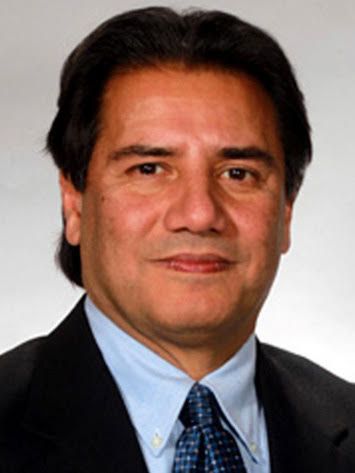
Mahmoud Daneshmand

Keynote I: Mahmoud Daneshmand

Industry Professor, Stevens Institute of Technology

Title: TBA

Abstract:
TBA

Biography:
Mahmoud Daneshmand is an educator and technology leader with more than four decades of combined industry and academic experience at Bell Laboratories, AT&T Labs, and leading universities worldwide. He is Professor of Business Intelligence & Analytics and Computer Science at Stevens Institute of Technology and a recognized expert in Big Data Analytics, IoT, AI, and machine learning.

He has held senior technical and leadership roles at AT&T, led over 60 major projects in communications and data analytics, and helped shape key industry standards. Globally, he is a co-founder and steering leader of the IEEE Internet of Things Journal and IEEE Big Data Initiative, and serves on multiple international advisory and editorial boards in big data and IoT.

Jian Ren

Keynote II: Jian Ren

Professor, Department of Electrical and Computer Engineering, Michigan State University

Title: Toward Robust Machine Learning Classification under Adversarial Attacks

Abstract:
Deep learning models have achieved remarkable accuracy in a wide range of classification tasks; however, their vulnerability to adversarial attacks remains a critical security concern. Although modern classification schemes can achieve high accuracy on clean data, they may still be highly susceptible to carefully crafted perturbations that induce misclassification. To investigate this vulnerability, we propose an algorithm to generate pairs of indistinguishable samples under both perceptual and quantitative similarity measures, while producing different classification outcomes. Specifically, one sample lies inside the target class, whereas the other lies outside the class boundary and is classified incorrectly.

To quantitatively characterize this phenomenon, we introduce two fundamental metrics: robustness, which measures the maximum tolerable sample distortion before misclassification occurs, and separability, which quantifies the perceptual distance between correctly and incorrectly classified samples near decision boundaries. These metrics provide a systematic explanation for the existence of adversarial examples by revealing the relationship between decision boundaries, sample similarity, and classification vulnerability. Furthermore, they establish a new framework for designing machine learning classification schemes for achieving robust classification under adversarial attacks.

Biography:
Jian Ren is a Professor in the Department of Electrical and Computer Engineering at Michigan State University. Dr. Ren’s research interests include cybersecurity and privacy, AI security, distributed data sharing and storage, decentralized data management, secure cloud computing, big data security, cost-aware privacy-preserving communications, and blockchain-based e-voting.

Dr. Ren’s research has been supported by multiple sources, including the National Science Foundation, AFRL, the Semiconductor Research Corporation, MSU Technologies, and other industrial collaborators. He is a recipient of the National Science Foundation (NSF) CAREER Award (2009).

Prof. Ren has served as TPC Chair or Co-Chair for multiple conferences and has been the Executive Chair of ICNC since 2019. He is currently serving as Editor-in-Chief of IET Communications. Previously, he served as an Associate Editor for the IEEE Transactions on Mobile Computing, the IEEE Internet of Things Journal, and the ACM Transactions on Sensor Networks. Dr. Ren is an IEEE Fellow and also a Distinguished Lecturer of the IEEE Vehicular Technology Society (VTS).


Hamid Sharif

Keynote III: Hamid Sharif

Charles J. Vranek College of Engineering Professor, University of Nebraska-Lincoln, USA

Title: From Concealed to Self-Sovereign: Rethinking Identity Privacy for 6G and Future Networks

Abstract:
This talk will discuss identity privacy as a core design requirement for 6G and future networks. Although 5G introduced over-the-air identity protection, it depends on persistent identifiers for authentication, session management, billing, policy enforcement, and lawful interception. This creates a structural privacy vulnerability that will intensify in 6G and other networks that support cross-domain interoperability, edge intelligence, autonomous services, critical infrastructure, and personalized connectivity. Drawing on a schema-level analysis of the latest frozen 3GPP 5G-Advanced Core OpenAPI specifications, the talk presents how deeply subscriber identifiers remain embedded in the current 5G Core and why preserving this model would increase exposure to insider threats, compelled disclosure, and large-scale metadata correlation. It argues that 6G must shift from operator-centric identity trust to zero-trust, privacy-preserving, subscriber-controlled architectures using ephemeral identifiers, pseudonymization, self-sovereign identity, and zero-knowledge proofs to decouple network access from permanent identity.

Biography:
Dr. Hamid Sharif is an IEEE Fellow and the Charles J. Vranek Distinguished Professor with the Department of Electrical and Computer Engineering at the University of Nebraska-Lincoln (UNL). He is also the Director of the Advanced Telecommunication Engineering Laboratory (TEL) at UNL. He has nearly 40 years of academic and industrial experience. He has published over 450 research articles in national and international journals and conferences and has served on many IEEE and other international journal editorial boards. Dr. Sharif has served as PI/Co-PI for a large number of research projects funded by DoE, DoT, NSF, DoD, and local and national industries. His research has been recognized through numerous research awards and best paper awards. He has been a Distinguished Lecturer for the IEEE Vehicular Technology Society.